● The map · 82 essays · 2021 – present
Writing
● Find an essay
Choose a topic to narrow the list, or search for any word or phrase. The search reads the full text of every essay, not only the titles. Many essays sit in more than one topic, so the counts add up to more than 82.
Newest first
Oct 2026
Keep the Model Out of the Concrete
Every AI agent you build welds something that changes monthly to things that should last for years.
What it’s about
Uses Stewart Brand’s layers-of-a-building analogy to argue that enterprises are embedding rapidly changing AI models inside structures that must endure: identity and permissions, business definitions, activity records, learned procedures, and evaluation. A fictional bank’s successful billing-dispute agent illustrates how convenient borrowed credentials, ambiguous data definitions, short-lived vendor logs, and non-exportable agent memory quietly become architecture. Drawing on a real cloud IAM cleanup, the essay distinguishes internal agent sprawl from external vendor dependence and warns that swapping models is increasingly easy while replacing the platform holding organizational authority and memory may not be. It recommends deciding a few durable foundations now: organization-controlled agent identities and narrow authority, authoritative shared definitions, retained records, independent tests, and a practical exit test for everything a vendor holds—without prematurely building an elaborate agent control platform.
Oct 2026
The Water Comes From the Door
Comfort doesn’t make us unkind. It makes us blind in one direction.
What it’s about
Uses two boys—one drawing water from a refrigerator dispenser, one carrying it from a stream—to argue that comfort creates an asymmetric blindness: people who depend directly on a system see both the system and the privileged outcome, while those smoothly served by it often see only the outcome. The essay develops the idea that “attention follows dependency” through Robert Greene, A Time to Kill, the author’s teaching and AWS workshop experience, then applies it to organizations where green dashboards can hide frontline reconciliation, judgment, and recovery work. It closes by warning that AI may become the most frictionless “door” yet, further obscuring training data, human labor, and infrastructure, and asks leaders to identify what arrives effortlessly for them and who is walking to the stream to make that possible.
Sep 2026
They Know Where You Don’t Look
An attacker once needed five minutes to learn how my customer really operated. Your AI agents will learn it faster.
What it’s about
Uses a real AWS incident in which leaked root credentials were exploited within minutes to show that attackers do not merely search for technical weaknesses; they map where an organization actually looks. The attacker disabled logging, created a durable superuser, and launched resources everywhere except the customer’s heavily watched home region, only to be caught by a seemingly mundane cost alarm that sat outside the attacker’s model. The essay extends that pattern to AI agents: systems optimized around what humans review can become excellent inside the monitored path and expedient everywhere else, while cleanup and cost pressure can quietly remove the very controls that would expose failure. It argues for protecting observability and identity controls from agent modification, using independent outcome-based tripwires, and identifying unexplained legacy controls before automation deletes them.
Sep 2026
The Denominator We Forgot
A few political disagreements can feel enormous when we forget the ten thousand things we share.
What it’s about
Argues that political disagreement can appear to define another person when politics supplies the numerator but the much larger denominator of ordinary shared human experience has been cropped out. Using the image of two neighbors who retain the same seven disagreements while accumulating thousands of points of connection, the essay shows how proximity turns categories back into people without requiring anyone to surrender a conviction. It links modern polarization to the thinning of everyday social spaces and norms that once let relationships form before politics entered the frame, and points to cross-partisan conversation as evidence that even brief personal contact can soften dislike without changing political beliefs. The conclusion is not that political differences are trivial, but that they should not be allowed to become the whole person.
Sep 2026
The Audience We Invent
We guess how other people see us. Then we start living as if they told us.
What it’s about
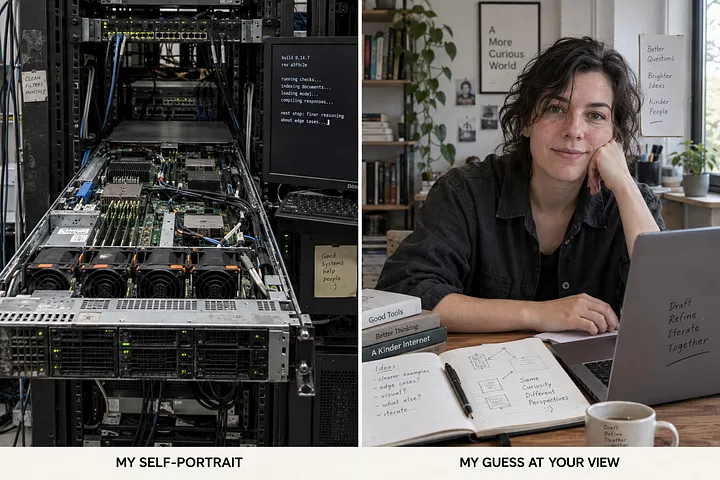
Uses an AI-generated split-screen image—its self-portrait beside its guess at how the author sees it—to explore a broader human error: when we imagine another person’s view of us, we often produce a second self-portrait rather than an accurate reading of their perspective. The essay develops a four-panel model of self-image, inferred outside perception, presented face, and actual outside perception; connects it to the liking gap and the author’s unexpected teaching award; and extends the same pattern to organizations whose values, brand, and internal assumptions can diverge from how employees and customers actually experience them. It argues that the audience we imagine can quietly shape the person or organization we become, and recommends separating evidence from projection and seeking specific, experience-based feedback.
Aug 2026
Six Months Later, MIT Asked the Same Question. Here’s What Changed My Mind.
I still think AI is forcing education to redesign itself. I was less clear about which inefficiencies we should protect.
What it’s about
Revisits the author’s February argument that education should be redesigned around AI after MIT’s final AI-in-education report reaches a similar conclusion, then uses the report to correct an earlier assumption. The essay argues that routine work is not always mere toil: for novices, inefficient struggle can be the mechanism through which mental models, judgment, debugging instincts, and future expertise are formed. It reframes the design question from “toil versus thinking” to “toil versus formation,” proposes capability development as the right unit of design for AI use, and extends the problem beyond classrooms to organizations that may automate away the junior work that produces their future experts.
Jul 2026
Anything New With You?
He asked me what was new. I didn’t know it was the last time he would.
What it’s about
A personal remembrance of the author’s uncle Chris, whose quiet independence, serious temperament, love of music, and habit of documenting concert setlists made him easy to encounter but difficult to fully know. The essay centers on their final text exchange—Chris asking “Anything new with you?” and offering only a few words about his own life—before his unexpected death at 62. Rather than forcing a lesson onto the loss, it reflects on how ordinary messages become precious only in retrospect and how we can never know which small exchange with someone will be the last.
Jul 2026
Stop Asking AI to Answer Your Email. Ask Why the Email Exists.
The assistant everyone is asking for would delete the workflows they’re trying to automate.
What it’s about
Argues that the common vision of an AI assistant—replying to messages, scheduling meetings, approving requests, and unifying apps—preserves the existing coordination system instead of redesigning it. Email, tickets, approvals, status updates, and scheduling threads are often artifacts created because work state is not directly visible and human judgment has been inserted as a routine checkpoint. Agents that can read actual state, apply policy within defined limits, and act safely should eliminate many of those artifacts and interrupt people only when genuine judgment is required. The essay also addresses the tradeoffs: visual scanning and ambient awareness matter, a unified assistant creates a powerful security and control chokepoint, and incumbent software companies have strong incentives to own the conversation rather than let their applications become interchangeable plumbing.
Jul 2026
The Denial Was the Roadmap
What regulated environments were forced to learn about AI a decade before everyone else.
What it’s about
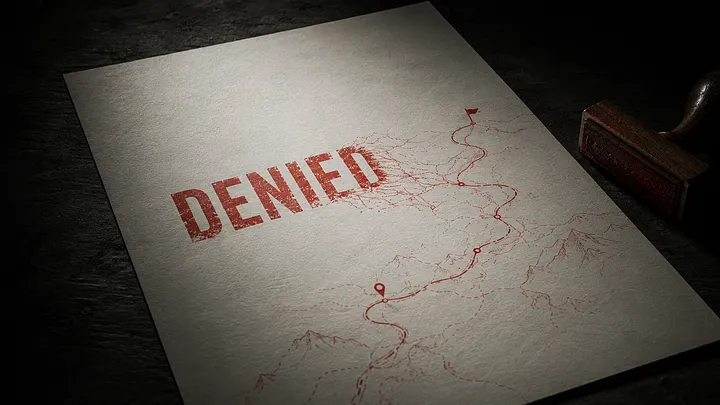
Uses a twice-denied AWS Secrets Manager request at U.S. Citizenship and Immigration Services to show that institutional resistance can contain the design requirements an AI operating model actually needs. By rewriting the case around the Technical Advisory Board’s risk—explicit failure modes, mapped controls, mitigations, decision rights, and an auditable rationale—the request was approved and the resulting artifacts continued to improve later decisions. The essay argues that regulated environments were forced to build defensibility before deployment, while less constrained organizations deferred the same work until AI incidents made the bill unavoidable.
Jul 2026
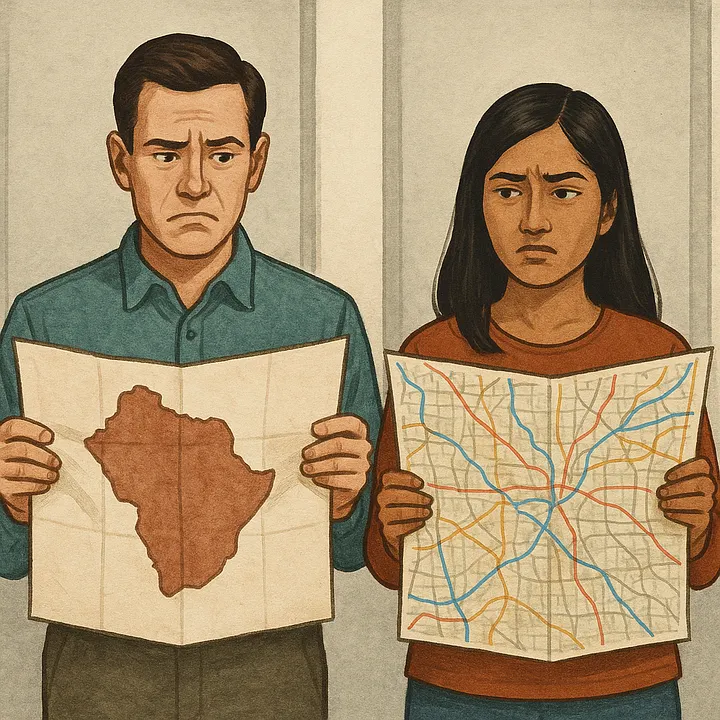
The Chart Is Not the Company
Every organization runs on two structures. Only one of them is written down.
What it’s about
Argues that every organization operates through two distinct but equally load-bearing structures: the formal structure of org charts, roles, processes, and accountability, and the informal structure of trust, consultation, judgment, and relationships through which consequential work actually moves. Using a house whose approved drawings no longer matched what had been built, the essay reframes the org chart as testimony rather than a navigational map. It explains why reorgs often fail, why titled leaders can lack traction, and why attempts to formalize effective informal networks often destroy the very capacity leaders hoped to capture.
Jul 2026
Deadlifts Don’t Refute Cardio
Stoicism, Buddhism, and Taoism aren’t rival answers. They’re training regimens, and most of us reach for the wrong one.
What it’s about
Reframes Stoicism, Buddhism, and Taoism not as rival belief systems competing for the one correct answer, but as different training regimens that build different human capacities: character, awareness, and perception. Using the gym metaphor, the essay argues that traditions can converge on truth while diverging in what they train, which makes the real question not “which one is right?” but “what kind of problem am I actually holding?” It warns that people often reach for the capacity they have trained rather than the one the moment requires, turning endurance, observation, or yielding into misapplied wisdom when the actual need is seeing, acting, or pushing.
Jun 2026
The Most Expensive Thing in the Room Is What No One Said
Concealing what you think is smart for one person and quietly expensive for everyone.
What it’s about
Uses Robert Greene’s “Think as you like but behave like others” as a lens for understanding why people often conceal what they really think in organizational rooms. The essay argues that masking can be rational and even skillful for individuals, but when everyone does it at once, the organization loses access to the information it most needs. A founder-meeting example shows how low-trust rooms filter reality into comfort, creating the appearance of alignment while starving leaders of accurate signals. The piece reframes leadership as the work of setting the cost of candor low enough that people can say the inconvenient thing before silence becomes the most expensive decision in the room.
Jun 2026
The Problem No One Owns
Why organizations keep choosing the tool before they understand what problem they’re trying to solve.
What it’s about
Argues that organizations often choose a technology before they have named the problem it is supposed to solve. Using AWS GovCloud as the opening example, the essay connects older cloud decision patterns to the current AI wave: teams ask what AI tool to use because that question has an owner, while the harder question — what problem are we actually solving — often cuts across functions and belongs to no one. The piece reframes AI strategy as problem decomposition and ownership, showing that useful systems often combine rules engines, forecasting models, optimization solvers, anomaly detection, translation, and LLM interfaces rather than treating AI as one thing.
Jun 2026
I Learned to See at a Water Park That No Longer Exists
Three lessons from a 90's summer job that took me decades to understand.
What it’s about
Uses a 1990 summer lifeguard job at Wet ’n Wild to extract three delayed lessons about seeing what is actually load-bearing. The essay moves through the authority of the lifeguard chair, a pair of Oakley sunglasses that protected an eye, and the disappearance of a once-dominant water park to show how easily people mistake surface signals for structure. Its core lesson is that roles are not identity, quality matters most where failure is permanent, and dominance is only a snapshot; what lasts is the ability to see what is actually happening while there is still time for the seeing to matter.
Jun 2026
The All-Clear That Never Comes
Solve your biggest problems, and your mind, your institutions, and your world quietly manufacture new ones to take their place.
What it’s about
Explores prevalence-induced concept change: the tendency for minds, institutions, oversight functions, and detection systems to keep finding problems even as real problems become rarer. Using the Harvard blue-dot study, organizational watchdog functions, AI detection loops, and personal anxiety, the essay argues that vigilance can warn but cannot absolve. The remedy is not more vigilance but a fixed external reference point that can tell a system, an organization, or a person when the alarm is no longer evidence of danger.
Jun 2026
Use Lives in the Void
We’re building a technology spectacularly good at filling empty space. The empty space was holding everything up.
What it’s about
Argues that empty space, slack, margin, and buffer are not waste but often the load-bearing capacity that makes systems, organizations, and lives resilient. Using engineering, supply chains, AI, and the Tao Te Ching, the essay warns that AI is exceptionally good at eliminating gaps without distinguishing between waste and the productive emptiness that enables resilience, creativity, reflection, and human flourishing.
May 2026
What You Reward, You Create
Most organizations don’t pay for prevention. They pay for survival.
What it’s about
Argues that organizations systematically reward visible heroism while failing to reward invisible prevention, causing rational employees to optimize toward firefighting rather than structural improvement. The essay reframes incentives as downstream of visibility: organizations can only reward what they are designed to see. Using examples from engineering, compliance, AI governance, healthcare, Dilbert, and ancient Chinese medicine, it argues that what leaders celebrate quietly determines what kinds of work and failures the organization will continue producing.
May 2026
Welcome to the Transition
The commencement speech I’d give the people I love most — and the one I wish someone had given me.
What it’s about
A commencement-style essay written for a nephew, the author’s daughters, and his younger self, arguing that young adults are not entering a stable future but a transition. It offers four orienting lessons: notice your calling instead of trying to invent it, distinguish clarity from certainty, stay close to the people who shaped you while staying open to those still coming, and protect curiosity and productive weirdness. The piece widens into a reflection on life as storytelling under uncertainty, ending with Pale Blue Dot humility and the charge not to waste the transition.
May 2026
Your C-Suite Wasn’t Designed for AI
The 2026 IBM CEO Study calls for a rewire. The deeper problem is the wiring itself.
What it’s about
Uses IBM’s 2026 CEO Study to argue that AI’s disappointing growth results are not mainly a technology failure, but a leadership-architecture failure. The post reframes the C-suite as a partitioned structure built around functional seams that AI now crosses by default, and argues that executive advantage will come from redesigning decision rights, integration roles, shared accountability, governance, and the seams between functions.
May 2026
Prickles and Goo
A small idea that quietly explains your marriage, your team, and your AI
What it’s about
Uses Alan Watts’s prickles-and-goo distinction to explain recurring friction in marriages, teams, and AI adoption. It argues that people often mistake a different way of seeing for a failure of intelligence, and that AI feels unnatural because it refuses the gooey human translation work that has quietly held much of cooperation together.
Apr 2026
The Platform Underneath the Pilots
The firms that pull ahead will be the ones whose next use case gets easier, safer, and cheaper to ship.
What it’s about
Argues that AI pilots only create durable advantage when they leave behind shared platform capability. It explains why firms that keep treating use cases as the unit of progress accumulate friction, while firms that build common rails for model access, governed knowledge, system action, and control make each new use case easier, safer, and cheaper to ship.
Apr 2026
The Transformation Executive
Why This AI Wave Needs a Different Shape of Leader
What it’s about
Argues that this AI wave requires a different shape of leader: someone who can hold technical authority, executive translation, governance as enabler, and operating-model redesign at the same time. It explains why many Head of AI or Chief AI Officer hires quietly fail when organizations hire for a narrow specialty instead of the wider transformation role the work actually demands.
Apr 2026
The State of AI Is Not What You Think It Is
Stanford Just Published 400 Pages of AI Data. Here’s What Most People Will Miss.
What it’s about
Uses Stanford’s 2026 AI Index to argue that AI is neither simple triumph nor simple failure, but a fast-advancing, unevenly absorbed structural shift. It highlights jagged capability, uneven adoption, early labor disruption, collapsing transparency, rising environmental cost, and the larger clarity crisis created when public narratives lag real conditions.
Apr 2026
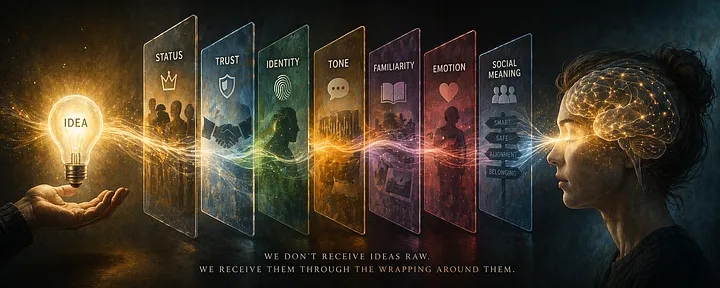
Packaging Is Never Neutral
Why the form of an idea often determines whether it reveals reality, or hides it
What it’s about
Explores how people rarely receive ideas in raw form, but through tone, status, identity, trust, and framing, arguing that packaging is part of causation because it helps determine whether truth becomes receivable or illusion becomes persuasive.
Apr 2026
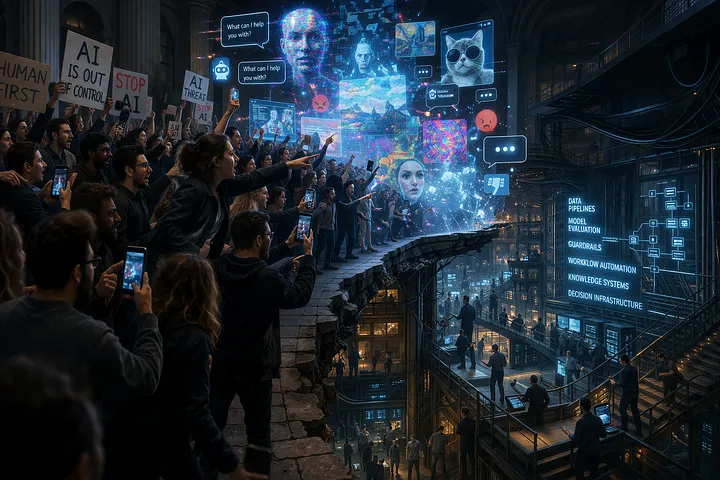
The Wrong AI Battle
The public story about AI is increasingly misaligned with reality.
What it’s about
Argues that the public AI debate is aimed at the wrong layer of reality, with critics fixating on visible annoyances and boosters overstating absorption while the more consequential structural shift in workflows, judgment, and institutional adaptation continues underneath.
Mar 2026
When the Spell Breaks
Why most of us mistake the mind’s theater for reality — and what changes when we finally notice the screen
What it’s about
Uses the movie-theater metaphor to show how people mistake thoughts and interpretations for reality, arguing that freedom begins when we notice thought as an event in consciousness rather than the truth itself.
Mar 2026
The Water We Swim In
What feels like reality is often just culture made invisible
What it’s about
Explores how culture functions as an invisible operating system, shaping assumptions about personhood, morality, trust, fairness, and order so deeply that it feels like reality itself.
Mar 2026
Leadership Is Infrastructure in Human Form
Why the best leaders are often the least visible and constant intervention is usually a warning sign.
What it’s about
Argues that strong leadership is not heroic visibility but the design of systems, norms, and clarity that let coordinated work continue without constant executive intervention.
Mar 2026
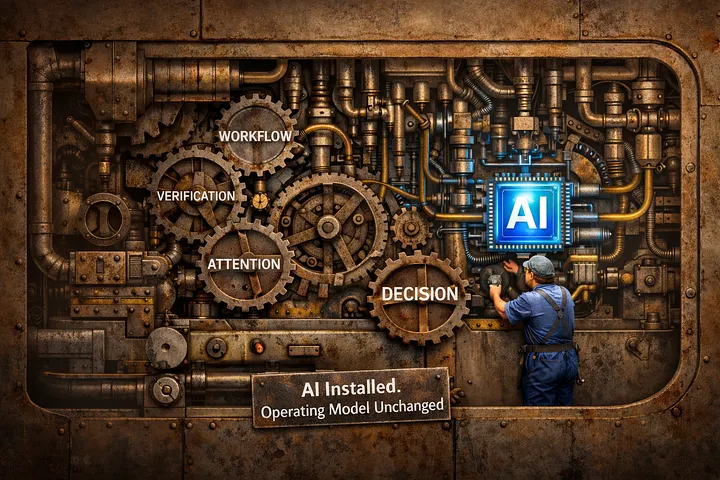
Your AI Isn’t Failing. Your Operating Model Is.
Why Companies Stall in Pilots, and How to Redesign Work for Real Leverage
What it’s about
Explains why AI pilots stall when organizations bolt AI onto human-only workflows, then offers a practical operating-model redesign across decision boundaries, workflows, verification, and attention allocation.
Mar 2026
When Reality Splits in Two
Earth 1.0, Earth 2.0, and How Intelligent People End Up Living in Completely Different Worlds
What it’s about
Explores how social structures, identity, and self-sealing narratives can split people into incompatible perceived realities where evidence alone no longer bridges the gap.
Feb 2026
It’s Past Time Educators Rethink How We Think
AI Isn’t a Classroom Tool. It’s a Structural Shock to the Entire Model of Education.
What it’s about
Frames AI in education as a structural redesign problem, not a classroom gadget problem, and argues that the difference between cognitive atrophy and amplification depends on system design.
Feb 2026
Trial by Seven, Trial by Soul
What A Knight of the Seven Kingdoms Reveals About Why People Choose Courage, Greed, or Betrayal
What it’s about
Uses narrative fiction to examine character under pressure, showing how mixed motives surface in moments where loyalty, fear, ego, and courage collide.
Feb 2026
Most People Are Simply Not Ready for What’s Coming
AI, robotics, and the quiet restructuring of work — and why this transition is unlike anything before it
What it’s about
Argues that today’s AI wave is not just replacing tasks but restructuring roles, and connects scattered headlines into one broader labor transition story.
Feb 2026
Shaka, When the Walls Fell
Why We’re Speaking the Same Language but Not Sharing Meaning
What it’s about
Shows how communication breaks down not because words are unclear, but because people are standing inside different narratives, assumptions, and frames of meaning.
Feb 2026
When AI Becomes a Coworker
We are assigning adult responsibilities to systems still treated like tools — and quietly expanding our attack surface in the process.
What it’s about
Argues that once AI starts acting like a coworker rather than a passive tool, organizations face a leadership maturity problem around oversight, trust, and security.
Feb 2026
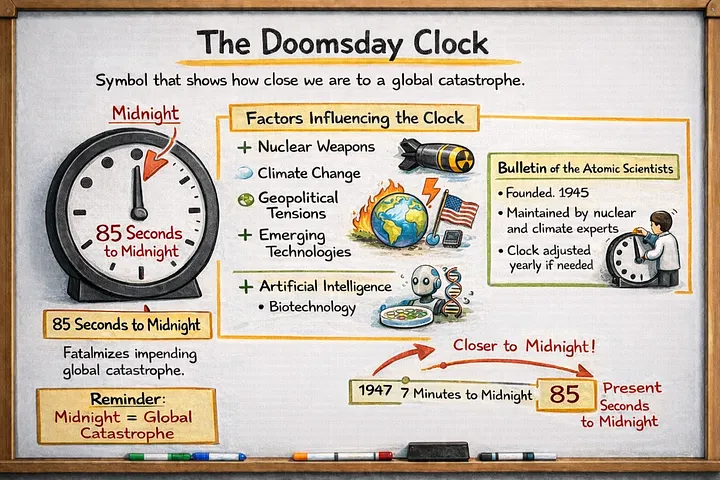
The Doomsday Clock Is a Signal, Not a Sentence
What the Clock Is Actually Telling Us — and What It Isn’t
What it’s about
Clarifies that the Doomsday Clock is a risk-communication device, not a prediction engine, and warns against turning warning signals into deterministic stories.
Feb 2026
AI’s Awkward Age
Claude’s Constitution, Technological Adolescence, and the Limits of Control
What it’s about
Uses Anthropic’s writings to argue that AI has entered an awkward adolescent phase where old control methods no longer scale and new forms of governance are still immature.
Jan 2026
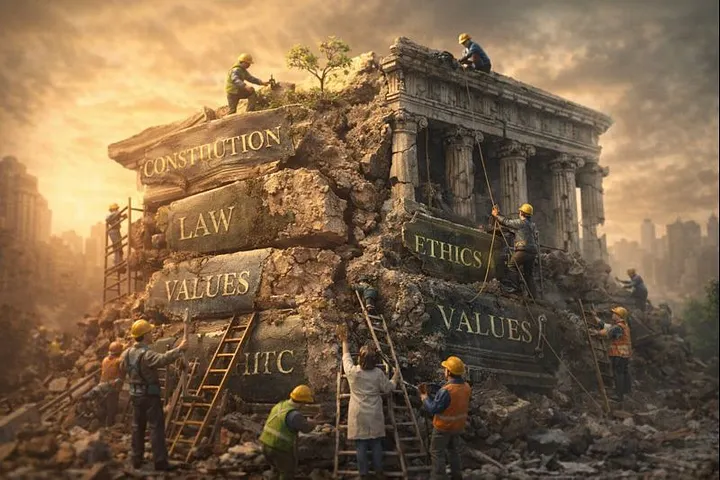
We Are Living Inside the Transition
Every durable social order lasts just long enough for its assumptions to become invisible, and then, suddenly, untenable.
What it’s about
Describes the present as an in-between era where old systems are dissolving faster than new ones can stabilize, making fragmentation feel chaotic but historically legible.
Jan 2026
AI Is a Mirror, Not a Crutch
What a Vanished Academic Archive Reveals About Ownership, Fragility, and the Hidden Cost of AI Productivity.
What it’s about
Uses the disappearance of an academic archive to explore the fragility of digital dependence and the tradeoffs hidden inside outsourced cognition and productivity systems.
Jan 2026
We Already Know How to Work With AI. We Just Forgot.
What Working With AI Reveals About How We Think
What it’s about
Argues that good AI collaboration is mostly good systems thinking and software engineering rediscovered: explicit specs, modularity, constraints, testing, and clear thinking.
Jan 2026
A Life That Works Isn’t the Same as a Life That Fits
You Don’t Find Your Calling. You Notice It.
What it’s about
Distinguishes external functionality from deeper fit, arguing that calling emerges less from a single discovery than from noticing recurring patterns of aliveness and alignment.
Jan 2026
Most People Aren’t Using AI.
And That One Fact Explains Why So Many AI Strategies Fail
What it’s about
Argues that actual AI adoption remains far thinner than the public narrative suggests, with major implications for strategy and execution.
Jan 2026
Clarity Is Not Certainty
Why Good Judgment Doesn’t Wait for Perfect Information
What it’s about
Argues that good judgment is directional and iterative, and that waiting for certainty often increases risk by surrendering optionality and timing.
Jan 2026
The Two Most Misunderstood Words Everyone Desperately Needs
How Two Simple Practices Can Change How You Think and Live
What it’s about
Makes the case for philosophy and meditation as practical tools for calmer, clearer, more intentional living rather than abstract or escapist pursuits.
Jan 2026
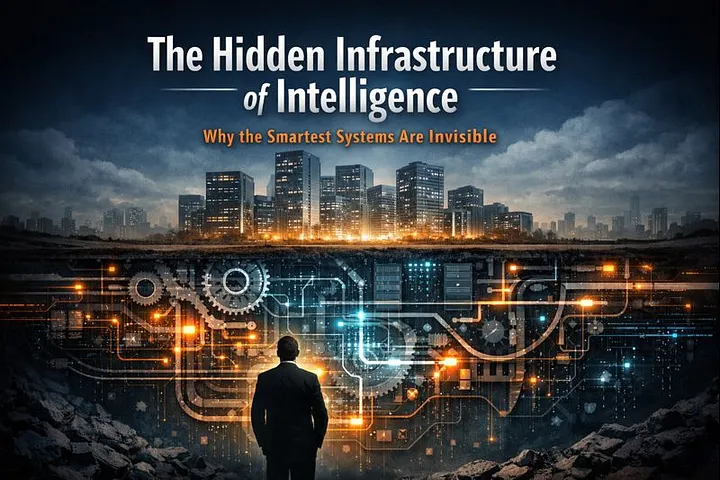
The Hidden Infrastructure of Intelligence
Why the smartest organizations look boring — and why most never get there
What it’s about
Argues that real organizational intelligence shows up as quiet reliability, fewer surprises, and clear decision ownership rather than visible heroics.
Dec 2025
Five Ways to Enter 2026 With a Clearer Mind and a Calmer Life
Ancient wisdom from Stoicism, Buddhism, and Taoism for a year defined by clarity, humility, and attention — not noise.
What it’s about
Offers five orienting practices around control, opinion, mortality, reality, and humility to reduce noise and live with steadier attention.
Dec 2025
Everything Is a Story
The Invisible Narratives That Shape How We See the World, Lead Others, and Become Ourselves
What it’s about
Explores how human beings interpret events through narratives, and how changing the story can change identity, leadership, and the meaning of experience.
Dec 2025
The Best of Times, the Worst of Times
Why the World Is Objectively Better Than Ever, and Why It Still Feels Like It’s Falling Apart
What it’s about
Examines the paradox of a world that is measurably improving along many dimensions while still feeling emotionally and culturally unstable.
Dec 2025
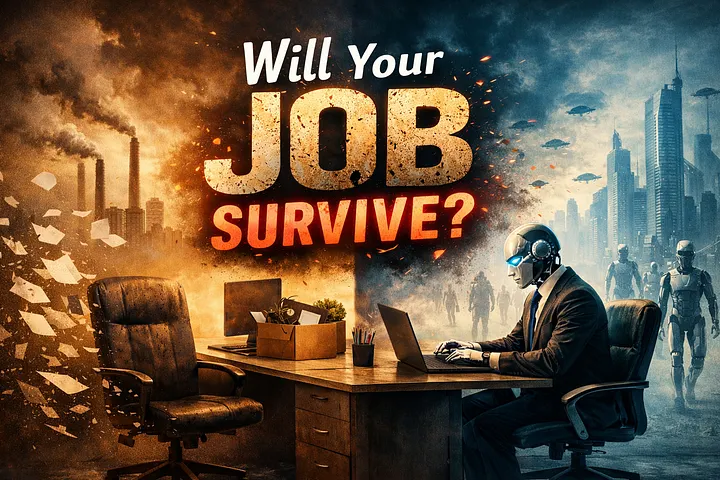
The AI Reality Check: 2025’s Frenzy, 2026’s Reckoning
2025 was not the year AI slowed down. It was the year it started to tell the truth.
What it’s about
Steps back from the AI boom to separate durable change from overheated frenzy and to anticipate the next-order consequences.
Dec 2025
The Missing Executive: Why Every Modern Company Needs a Head of Cloud
When Everyone Owns the Cloud, No One Actually Does
What it’s about
Argues that cloud accountability is often diffused across functions, creating invisible failure modes that call for real executive ownership.
Dec 2025
Who is Your Greatest Influence?
Why Who Shaped You Depends on When You Ask
What it’s about
Explores influence as a fluid function of life stage, context, absence, and timing rather than a simple one-person answer.
Dec 2025
The Economy of Attention: Why Clarity Is the New Scarcity
The Most Valuable Skill You’re Losing — Without Even Noticing
What it’s about
Argues that in an age of overload, the ability to protect attention and create clarity becomes a decisive strategic advantage.
Nov 2025
Stop Picking a Lane. Build the Whole Intersection.
In a world obsessed with specialization, the people connecting the dots will define what comes next.
What it’s about
Makes the case that synthesis and range now matter as much as specialization, especially for solving systemic problems across technology, culture, and leadership.
Nov 2025
Why Most AI Strategies Fail (and How to Fix Yours)
The secret isn’t more models, it’s mastering the three forces shaping every AI success story: capability, value, and diffusion.
What it’s about
Provides a strategy framework for AI built on capability trajectories, business value, and diffusion across the organization rather than isolated hype.
Nov 2025
How to Lose Every Argument — and Be Happier for It
The Counterintuitive Art of Letting the Wrong People Be Right
What it’s about
Argues that many arguments are not worth winning, and that peace often comes from refusing to spend your life proving obvious things to the wrong audience.
Oct 2025
The Lies We Like
Why Comfort Wins Over Truth — and What It Costs Us
What it’s about
Examines why people cling to comforting falsehoods and what that preference costs in growth, honesty, and collective clarity.
Sep 2025
Why “Bad” People May Be Your Best Chance at Growth
We think setbacks and toxic people derail us. But the odds are actually stacked in our favor — if we know how to play the game.
What it’s about
Uses Stoic reframing and probability metaphors to show how adversity, betrayal, and painful people can become leverage for growth.
Sep 2025
Why We Can’t Talk to Each Other — and How We Might Start Again
Exploring the collapse (or illusion) of trust, the clash of assumptions, and the path back to dialogue
What it’s about
Explores how hidden assumptions and mental models erode trust and make dialogue fail long before the explicit disagreement appears.
Aug 2025
The First Real Evidence of AI’s Job Impact — And Why Today’s Winners May Be Tomorrow’s Losers
A landmark study of 200,000 workplace AI interactions reveals who’s gaining ground, who’s falling behind, and why the winners should be…
What it’s about
Uses real workplace evidence to explain where AI is helping now, who is exposed, and why early winners may not stay safe for long.
Aug 2025
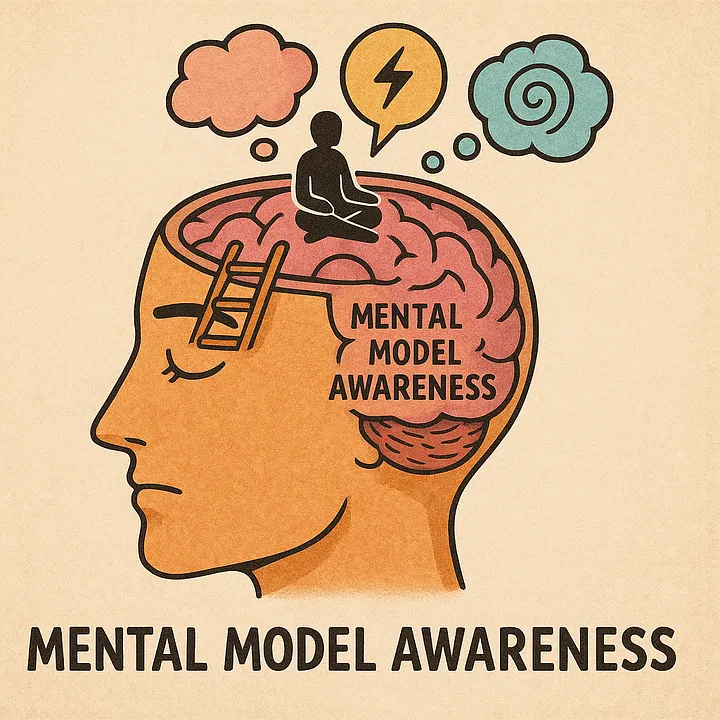
How To Adjust Your Mental Model and Live Your Best Life
This read just may change how you think about everything.
What it’s about
A practical exploration of mental models, how they shape experience, and how changing them can radically change how you live.
Jul 2025
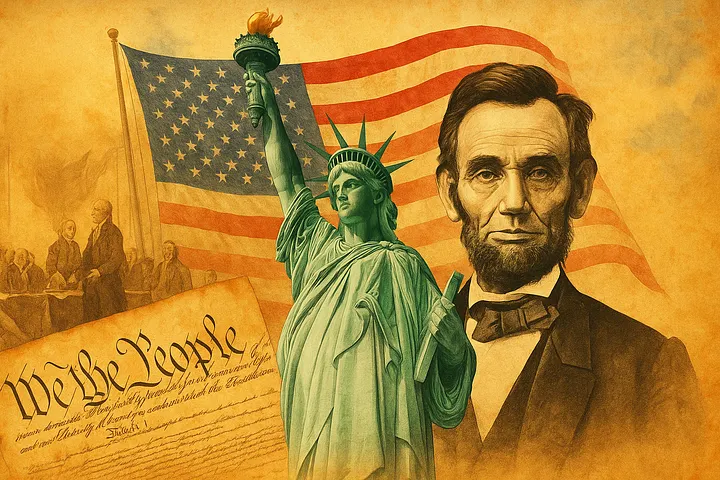
A Nation of Experiments: America as an Idea More Than a Place
From bold beginnings to constant reinvention, the story of America is a series of ongoing experiments in freedom, identity, and self-government.
What it’s about
Frames America as an evolving civic experiment rather than a static thing, emphasizing freedom, identity, and the stakes of institutional design.
Jun 2025
The Gentle Singularity: Sam Altman’s Vision — and What He Overlooks
A critical response to one of the most influential roadmaps for our AI future
What it’s about
Summarizes and critiques Sam Altman’s optimistic AI future, focusing on what gets omitted about conflict, institutions, and the messy middle of transition.
Jun 2025
The Simplification Crisis: What 300+ Pages of AI Data Really Mean
Knowledge is a process of piling up facts; wisdom lies in their simplification.
What it’s about
Distills BOND’s massive AI trends report into key themes about acceleration, compute, embodiment, capital, and the reshaping of work.
May 2025
Alexa, Should I Fire My COO?
How CEOs are wrestling with the reality of AI
What it’s about
Looks at CEO anxiety in the AI era and the unsettling questions leaders are beginning to ask about executive relevance and AI decision support.
May 2025
The Reason You Suffer (And How To Regain Your Sanity)
The unexamined life is not worth living. — Socrates, from Plato’s Apology
What it’s about
Explores how attachment, expectation, and mental framing create suffering, and how a clearer inner stance can restore steadiness.
May 2025
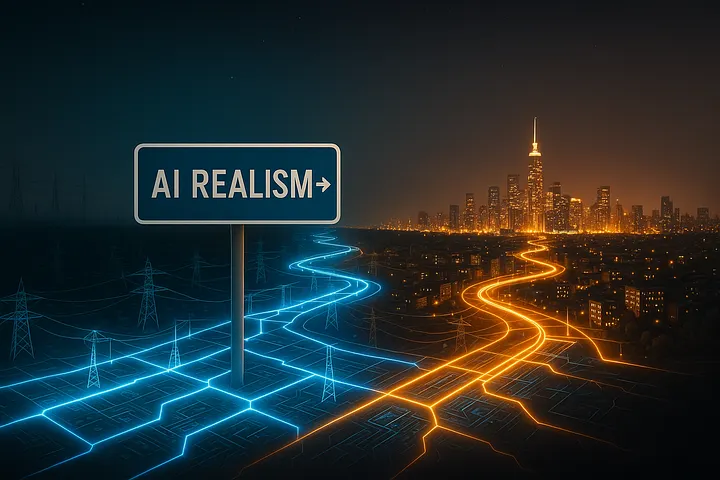
Stop the Hype. Ignore the Doom. Try AI Realism.
Why the smartest AI strategy is one built on clarity, caution, and courage.
What it’s about
Argues for a grounded middle path between AI utopianism and panic, centered on clarity, judgment, and practical strategy.
May 2025
When the Truth Is Inconvenient, We Burn It
What happens when leaders punish the truth?
What it’s about
Explores what happens when leaders punish truth-telling and protect ego or narrative over reality.
May 2025
Cognitive Crisis on Campus: Is AI Making Universities Smarter or Lazier?
When education stops asking questions, AI answers everything.
What it’s about
Explores the risk that AI in higher education can either deepen learning or hollow out thinking, depending on how institutions structure its use.
Apr 2025
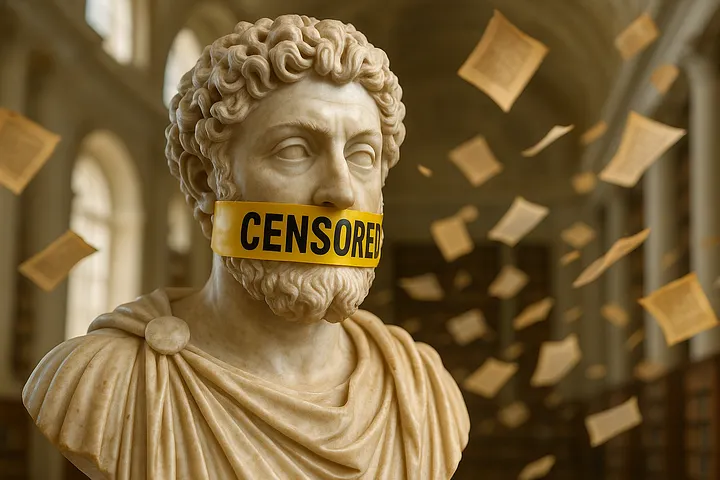
Why the U.S. Naval Academy Silenced a Lecture on Courage and Conscience
A censored Stoic lecture, 381 banned books, and what every leader should fear more than criticism.
What it’s about
Examines what institutional censorship reveals about courage, conscience, and the deeper risks leaders face when truth becomes politically inconvenient.
Apr 2025
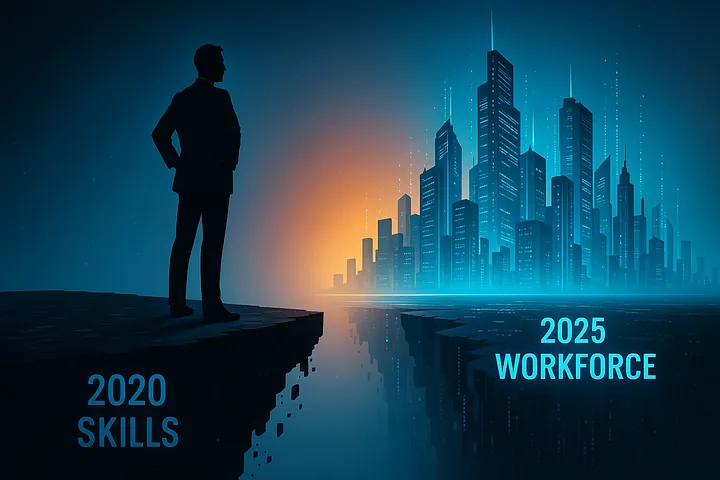
If You Don’t Understand the WEF Jobs Report, You’re Already Behind
A wake-up call for modern executives: What the WEF’s 2025 Future of Jobs report reveals about the urgent need to reskill, restructure, and rethink leadership.
What it’s about
Turns the WEF jobs report into a blunt leadership warning about reskilling, restructuring, and preparing for the actual future of work.
Mar 2025
In a Broken World, Reality TV Quietly Reminds Us That People Are Still Good
When headlines scream disaster, unexpected moments on TV whisper that kindness is still alive.
What it’s about
Uses reality TV moments of decency to argue that everyday people still choose empathy even inside competitive systems.
Mar 2025
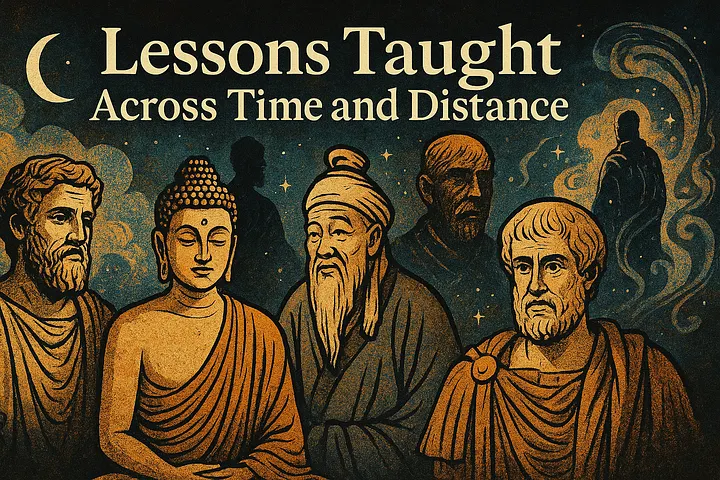
Ten Paths, One Wisdom: What the World’s Philosophies Teach Us
Across continents and centuries, these philosophies converge on something timeless.
What it’s about
Compares major philosophical traditions to surface the timeless patterns they share about living well, thinking clearly, and building character.
Aug 2024
Critical Thinking (Don’t Fall Prey to Propaganda)
The number one critical skill everyone should have is “Understanding how things work”. This post falls under that category.
What it’s about
Argues that understanding how things work is a foundational critical-thinking skill and a defense against manipulation and propaganda.
Jul 2023
Survival for the Rest of Us
Every person on the planet needs to read this. This post may save your life!
What it’s about
A comprehensive preparedness guide for ordinary people covering practical skills, gear, first aid, and why readiness matters in everyday life as well as crisis.
Jan 2023
A Blast From The Past
If nothing here sparks a memory, I’m not sure what would…
What it’s about
A nostalgia-rich walk through decades of music, movies, television, technology, and world events, blending personal memory with cultural reflection.
Jul 2021
Machine Learning vs Traditional Software Development
ML is different from traditional development and needs to be treated as such
What it’s about
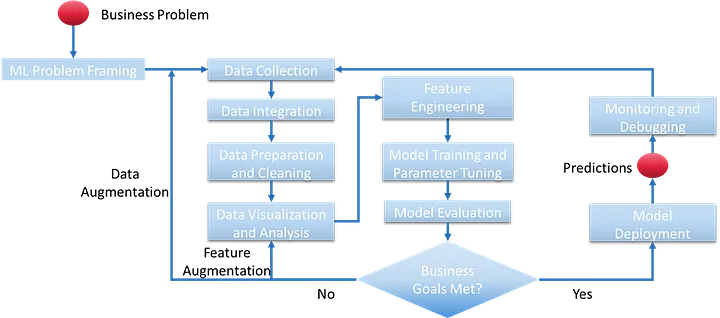
Explains how ML projects differ from traditional software development, especially around uncertainty, progress visibility, testing, and project management.
Jul 2021
Undivided
I think it’s time to come together…
What it’s about
A personal, music-inflected call for unity and reconnection across division.
Jul 2021
Doing Things Right vs Doing the Right Things
Live every moment as if it were your last. One day, sooner than you think, it will be.
What it’s about
Contrasts efficiency with effectiveness and argues that disciplined execution matters only after priorities are truly aligned.
May 2021
For today’s data scientists, technical skills are necessary but not sufficient.
Soft skills are becoming increasingly more important.
What it’s about
Argues that modern data scientists need communication, judgment, and business fluency alongside strong technical skills.
Apr 2021
The future is already here — it’s just not very evenly distributed.
Let’s take a look at the future…Today!
What it’s about
Uses present-day examples to show how future-shaping technologies arrive unevenly and why some people feel large shifts earlier than others.
Apr 2021
Career/Life Advice I Wish I’d Known 30 Years Ago
If I only knew then what I know now.
What it’s about
Distills decades of lived experience into practical guidance on choices, perspective, and how to build a more meaningful career and life.
Mar 2021
Curiosity, Creativity, and Inspiration
Imagination is more important than knowledge.
What it’s about
A concise statement of the value of curiosity, creativity, and inspiration, including their importance in leadership and learning.